Caffeine and Epigenetics: How Coffee Shapes Gene Activity
• By CaffCalc Team
Caffeine and Epigenetics: How Coffee Shapes Gene Activity
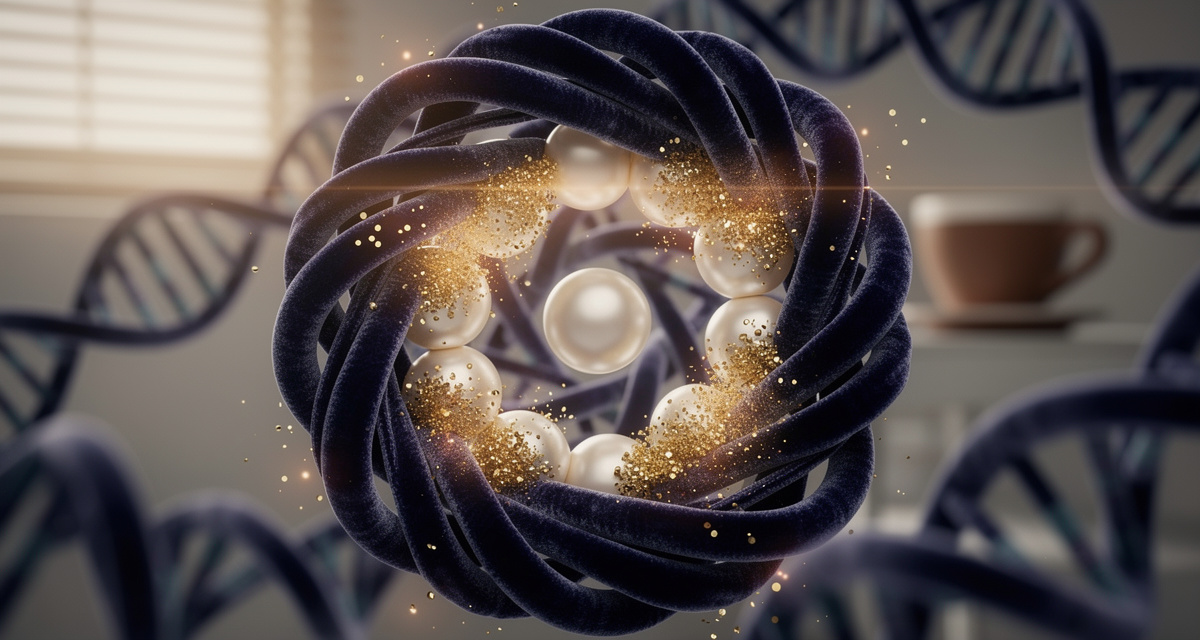
Your morning coffee doesn’t just wake you up—it may leave temporary “sticky notes” on your DNA. These epigenetic marks help decide which genes speak up and which stay quiet. Scientists are now mapping how caffeine relates to patterns of DNA methylation, histone modifications, and clock-gene activity. The takeaway isn’t that coffee rewrites your genome. It’s subtler: regular caffeine can influence gene regulation pathways tied to sleep, metabolism, and stress—mostly reversible, always context-dependent. In this guide, we translate the latest research on caffeine and epigenetics into plain language and give you practical steps to enjoy your brew while keeping your biology in balance.
Why Caffeine’s Epigenetic Effects Matter for Your Health
You feel alert after coffee because caffeine blocks adenosine receptors, lifting the brain’s “drowsy brake.” That same pathway triggers downstream signaling that affects gene activity and, in some cases, epigenetic mechanisms. Over time, patterns like when you drink caffeine, how much, and your sleep schedule can nudge these molecular systems.
Why should you care?
- Sleep quality: Caffeine consumed even 6 hours before bed can reduce total sleep time by up to an hour, and adenosine–clock-gene cross-talk suggests late doses may shift your circadian rhythm.
- Long-term patterns: Large studies link habitual coffee intake with specific DNA methylation sites in blood, suggesting lifestyle leaves measurable biochemical footprints.
- Life stages: During pregnancy, caffeine crosses the placenta. Researchers are examining how maternal intake relates to epigenetic marks in newborns.
Good news: these effects are not destiny. Epigenetics is dynamic. With smart habits—dose, timing, and sleep protection—you can enjoy caffeine and support your health.
The Science of Caffeine and Epigenetics (Made Simple)
Epigenetics refers to chemical “switches” on DNA and on the proteins DNA wraps around. They don’t change the DNA letters themselves, but they help control how loudly genes are read.
- DNA methylation: Small methyl groups attach to DNA and can dial genes down or up, depending on location.
- Histone modifications: Proteins called histones spool DNA tightly. Acetyl or methyl marks on histones loosen or tighten that packaging, changing gene access.
- Epitranscriptomics: Chemical marks on RNA (like m6A) influence how genetic messages are processed, though this remains an emerging area relative to caffeine.
Here’s how caffeine intersects with those systems:
Adenosine Receptor Blockade and the CREB Pathway
Caffeine blocks adenosine A1/A2A receptors, which can raise cAMP levels and activate a kinase called PKA. PKA then phosphorylates the transcription factor CREB.
Phosphorylated CREB recruits co-activators CBP and p300—enzymes that acetylate histones—opening local chromatin and turning on select genes. This is gene expression first and epigenetics second: the chromatin opening uses histone acetylation as part of the “on” switch.
Circadian Clock Gene Tuning
In cellular and animal models, adenosine signaling influences clock genes like PER1 and PER2. Because caffeine is an adenosine antagonist, timing your dose can subtly shift circadian signals, especially when taken late in the day.
This isn’t permanent genome change. It’s more like moving the dimmer switch on your internal clock.
DNA Methylation Signatures in Coffee Drinkers
Large epigenome-wide association studies (EWAS) link coffee consumption with specific DNA methylation sites in blood, including regions near genes involved in detoxification and metabolism. These are population-level associations—not proof that caffeine alone causes the changes—but they show lifestyle correlates of methylation patterns.
Importantly, effect sizes tend to be modest and are influenced by confounders such as smoking and diet.
Pregnancy and Developmental Windows
Researchers have observed correlations between maternal caffeine intake and methylation marks in cord blood at birth. Effects vary by genomic site and are still being clarified, which is why guidance focuses on precautionary intake limits rather than epigenetic specifics.
8 Practical Ways to Enjoy Caffeine While Respecting Your Biology
1. Set a Personal Caffeine Cutoff Time
Why it works: Research suggests caffeine taken 6 hours before bed can still disrupt sleep architecture, and adenosine–clock-gene cross-talk means late doses may nudge your circadian rhythm.
How to do it: For a 10:00 PM bedtime, aim to stop caffeine by 2:00–4:00 PM. If you’re sensitive or chasing better sleep, choose the earlier end (8+ hours before bed). Shift the last cup earlier over 1–2 weeks to minimise withdrawal headaches.
2. Keep Daily Intake Within Established Safety Ranges
Why it works: Health authorities generally conclude that up to about 400 mg per day is safe for most healthy adults. During pregnancy, the recommendation drops to under 200 mg per day. These thresholds balance benefits with risks regardless of epigenetic nuances.
How to do it: Typical estimates: an 8 oz brewed coffee contains roughly 80–100 mg; a single espresso shot around 60–75 mg; a 16 oz energy drink anywhere from 150–300 mg (labels vary widely). If you’re unsure where you stand, count your total daily caffeine with CaffCalc to see how your intake compares.
3. Time Your Boost for Performance, Not Bedtime
Why it works: Peak alertness usually arrives 30–60 minutes after dosing as cAMP/CREB-driven responses and other pathways kick in. Pairing your main dose with when you need focus—morning or early afternoon—maximises benefit without stealing sleep.
How to do it: Anchor your first dose 60–90 minutes after waking to avoid compounding natural adenosine clearance from sleep inertia. Use a smaller top-off (50–100 mg) in the early afternoon if needed, and avoid stacking large late doses.
4. Respect Context: Sleep Debt and Stress Amplify Effects
Why it works: When you’re sleep-deprived, adenosine pressure runs high. Receptor blockade can feel stronger yet more fragile, increasing jitters and making sleep disruption worse later. Chronic stress can also heighten sensitivity.
How to do it: Pair caffeine with solid sleep hygiene—consistent sleep window, morning sunlight, and wind-down routines. On short-sleep days, scale back your dose and skip afternoon caffeine entirely.
5. Consider Your Genetics and Personal Sensitivity
Why it works: People vary in caffeine metabolism (e.g., CYP1A2 gene variants) and adenosine receptor sensitivity (e.g., ADORA2A variants). These differences change how strongly caffeine affects alertness, anxiety, and sleep quality.
How to do it: If small doses cause anxiety or insomnia, reduce total milligrams and move doses earlier. Track simple outcomes—focus, jitters, time to fall asleep. Your reaction is your best guide, regardless of what averages suggest.
6. Apply Extra Caution During Pregnancy
Why it works: Caffeine crosses the placenta and has been linked to differences in newborn DNA methylation patterns. While health outcomes are still being studied, major organisations advise staying under 200 mg per day during pregnancy.
How to do it: Cap intake at under 200 mg daily. Consider decaf or half-caf blends to hit the target while keeping the ritual. For broader safety considerations during pregnancy and other sensitive periods, see our health advice page.
7. Avoid Concentrated Caffeine Powders and Large Stacks
Why it works: Pure or highly concentrated caffeine can deliver dangerous doses quickly—orders of magnitude beyond coffee or tea—raising serious health risks far beyond subtle epigenetic effects.
How to do it: Stick to conventional beverages and labelled products. Skip bulk powders and concentrated drops. If you use energy drinks, always read labels—16 oz cans can range from 150 mg to over 300 mg.
8. Build Caffeine-Free Windows Into Your Day
Why it works: Regular caffeine keeps adenosine receptors blocked for much of the day. Creating daily caffeine-free windows helps natural sleep pressure rebuild and reduces the need to escalate doses over time.
How to do it: Keep evenings completely caffeine-free every day. Try a 1–2 day full reset each week if your sleep quality drifts or afternoon doses start creeping later.
Frequently Asked Questions
Q: Does caffeine permanently change my DNA or my children’s DNA?
No. Caffeine does not alter your DNA sequence. Studies are exploring how habitual intake relates to epigenetic marks—like DNA methylation—that help regulate gene activity. These marks are dynamic and influenced by many factors including diet, sleep, stress, and environment. Many are reversible when habits change.
Q: Are the DNA methylation signals from coffee good or bad?
They’re signals, not diagnoses. EWAS studies find certain methylation sites associated with coffee intake, some near metabolism or detoxification genes. Associations are modest and can be influenced by other habits like smoking. They don’t prove harm or benefit on their own—they map biochemical footprints linked to lifestyle patterns.
Q: If caffeine activates CREB and opens chromatin, should I worry about overactivating genes?
CREB–CBP/p300 activity is a normal part of how cells respond to signals throughout the day. Caffeine’s effect is context- and dose-dependent, primarily impacting alertness pathways and timing. Staying within practical limits (up to 400 mg per day for most adults, under 200 mg during pregnancy) and timing doses wisely keeps these signals within a healthy range.
Q: Can decaf coffee affect epigenetics too?
Possibly in small ways. Coffee contains many bioactive compounds beyond caffeine—chlorogenic acids, polyphenols, and others—that can influence biology. Some EWAS findings may reflect coffee as a whole, not just caffeine. If you’re sensitive to the stimulant, decaf provides flavour and some of these compounds with much less stimulant effect.
Q: How would I know if caffeine is affecting my circadian rhythm?
Watch for signs like difficulty falling asleep at your usual time, waking during the night, or feeling unrested despite adequate hours in bed. Try eliminating afternoon caffeine for two weeks and track whether sleep onset improves. If it does, your circadian clock was likely being nudged by late-day doses.
Bottom Line and Your Next Step
Caffeine and epigenetics intersect where chemistry meets behaviour. Adenosine receptor blockade nudges signaling that can affect gene activity and, in some cases, chromatin openness. Long-term habits leave subtle, mostly reversible methylation footprints.
You don’t need to micromanage molecules—just manage dose and timing. Keep total intake in range, guard your sleep, and drink earlier in the day. The science is fascinating, but the practical advice is refreshingly simple.
References & Further Reading
Scientific sources supporting this article:
- Nature Communications: Adenosine integrates light and sleep signalling for circadian timing in mice
- Nature Communications (PDF): Adenosine integrates light and sleep signalling—mechanism details, CREB/pCREB
- Nature Communications: Epigenome-wide association meta-analysis of DNA methylation with coffee and tea consumption
- Human Molecular Genetics: Coffee consumption is associated with DNA methylation levels of human blood
- PubMed: Maternal caffeine consumption and offspring cord blood DNA methylation—EWAS meta-analysis
- FDA: Spilling the Beans—How Much Caffeine Is Too Much?
- EFSA Journal: Scientific opinion on the safety of caffeine (400 mg/day adults)
- ACOG: How much coffee can I drink while pregnant? (<200 mg/day)
- Journal of Clinical Sleep Medicine: Caffeine taken 0, 3, or 6 hours before bed disrupts sleep
- Molecular and Cellular Biology: CREB-binding protein has histone acetyltransferase activity
- Sleep Foundation: Caffeine and Sleep—consumer guidance on timing and sleep quality
Medical Disclaimer: This article is for informational purposes only and does not constitute medical advice. Consult with a healthcare provider before making significant changes to your caffeine intake, especially if you have underlying health conditions, take medications, or are pregnant or nursing.