Caffeine and Methylation: What Coffee Does to Your One-Carbon Cycle
• By Ivan Ushakovsky
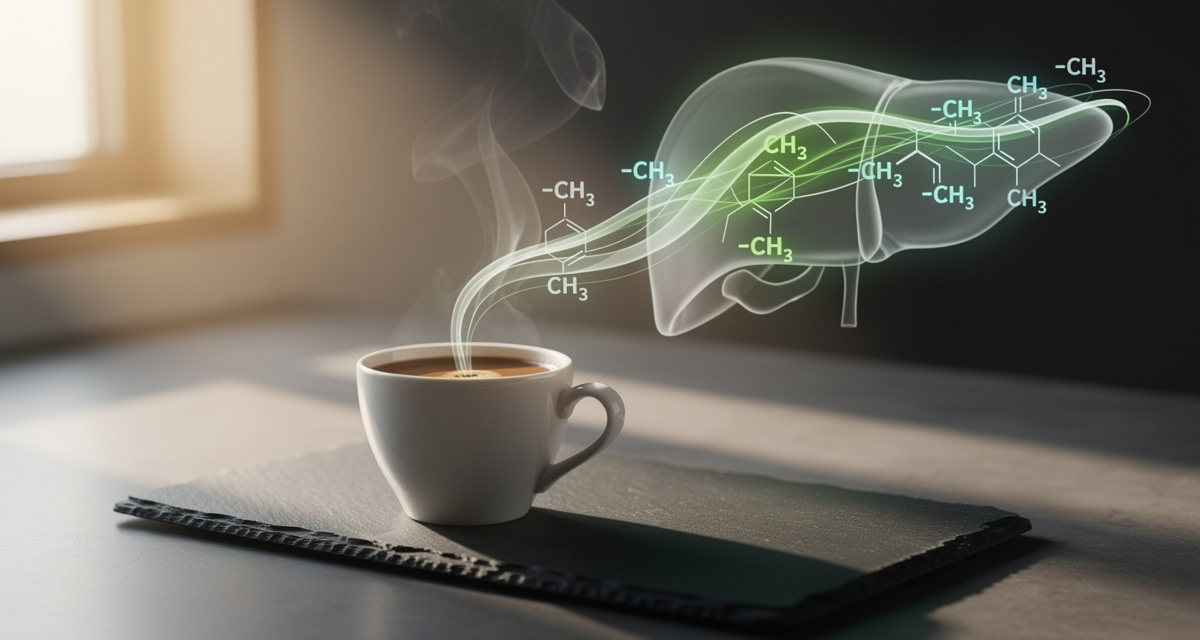
Caffeine and Methylation: What Coffee Does to Your One-Carbon Cycle
Does your morning coffee really “steal” your methyl groups? It’s a claim echoing across wellness circles—and the answer is more interesting than yes or no.
Methylation is your body’s quiet workhorse: a chemical process that tags DNA, proteins, and neurotransmitters with tiny methyl groups, influencing everything from gene expression to mood. Caffeine, the world’s favorite stimulant, intersects with this system in ways most people never hear about. In this guide, you’ll learn exactly how coffee and caffeine interact with the one-carbon cycle, what research shows about DNA methylation patterns, and the practical steps that keep your methylation machinery humming.
Why methylation (and caffeine) should be on your radar
Methylation is a core biochemical workflow your cells use daily. It regulates gene expression, recycles homocysteine back to methionine, and maintains neurotransmitter balance.
This “one-carbon metabolism” depends on nutrients like folate (vitamin B9), vitamin B12, vitamin B6, choline, betaine, and methionine. Together, they generate S-adenosylmethionine (SAM), the body’s primary methyl donor. When this system falters—because of low B-vitamin intake, certain genetic variants, or illness—homocysteine can rise and methylation-dependent processes may slow.
So where does caffeine fit in? Two places:
- As a psychoactive compound, caffeine blocks adenosine receptors, which is why you feel alert.
- As a dietary component of coffee and tea, it travels with other bioactives (like chlorogenic acids) that can interact indirectly with one-carbon metabolism and with DNA methylation marks measured in blood.
For most healthy adults, up to 400 mg of caffeine per day is considered safe by major authorities. We’ll use that ceiling as we translate the science into practical, safe habits. For broader guidance on safe intake levels, see our health advice page.
The science: caffeine, coffee, and your methylation process
1) Caffeine’s core mechanism isn’t “using up methyl groups”
Caffeine works mainly by antagonizing adenosine receptors (A1, A2A) in the brain and body, lifting the natural “brake” adenosine places on neural activity. That’s the alertness you feel.
It’s metabolized primarily in the liver by the enzyme CYP1A2 through N-demethylation to paraxanthine and related compounds. This chemical demethylation happens on the caffeine molecule itself and does not draw on your body’s SAM “methyl budget.”
Key facts:
- Caffeine is a non-selective adenosine receptor antagonist that increases wakefulness.
- Roughly 80% of caffeine is converted to paraxanthine via CYP1A2.
- Genetic differences in CYP1A2 and adenosine receptor genes help explain why some people feel wired on a small latte while others barely notice a double espresso.
2) Coffee and DNA methylation signatures in blood
Large epigenome-wide association studies (EWAS) have linked habitual coffee intake with modest, specific differences in DNA methylation at several CpG sites in blood. These changes are small in magnitude and observational—not proof of cause and effect—but they cluster in genes involved in xenobiotic metabolism and inflammation.
One strongly associated site lies in AHRR, a regulator of the aryl hydrocarbon receptor pathway. Another notable signal involves PHGDH, a gene tied to serine biosynthesis and liver fat biology.
The takeaway: coffee drinking is associated with measurable epigenetic marks in blood, but whether caffeine or other coffee compounds drive those marks—and what they mean for long-term health—remains under active study.
3) Coffee, chlorogenic acids, and homocysteine
Beyond DNA methylation marks, multiple randomized trials show that coffee can modestly increase plasma homocysteine, an amino acid produced as a by-product when SAM donates methyl groups. This rise appears to be driven more by coffee’s non-caffeine components (notably chlorogenic acids) than by caffeine itself.
Importantly, maintaining adequate folate—and sometimes B6—can blunt or eliminate this effect, because folate and B12 help remethylate homocysteine back to methionine.
What this means practically: if your diet is low in folate and B-vitamins, heavy coffee intake may nudge homocysteine upward. If your intake is adequate, the effect is smaller and may be negligible.
4) Safe intake limits and individual differences
- For most adults, up to 400 mg/day of caffeine is considered safe; single doses up to 200 mg are generally well tolerated.
- Pregnant individuals and those with certain conditions (e.g., uncontrolled hypertension, anxiety disorders) should consult healthcare providers about lower targets.
- Slow metabolizers (lower CYP1A2 activity) and people with adenosine receptor variants may feel stronger effects at lower doses.
Practical ways to enjoy caffeine while supporting methylation
1) Keep caffeine within widely accepted limits
Aim for ≤400 mg/day if you’re a healthy adult. That’s roughly 3–4 small cups of brewed coffee (8 oz each), depending on brew strength. Sensitive to caffeine? Start lower (100–200 mg) and monitor how you feel. If you’re pregnant or on interacting medications, ask your clinician for a personalized limit.
Why it works: Staying within established safety ranges reduces sleep disruption, anxiety, and blood pressure spikes that indirectly stress methylation-related systems.
2) Build a B-vitamin-friendly plate
Include folate-rich foods daily: leafy greens (spinach, romaine), legumes, asparagus, avocado, and citrus. Add B12 sources (fish, dairy, eggs; fortified foods if you’re plant-based) and B6 (poultry, potatoes, bananas). If your diet is low in these nutrients—or labs show low folate/B12—talk to your clinician about supplementation.
Why it works: Folate (B9) and B12 remethylate homocysteine to methionine, supporting SAM production. Adequate B6 supports the transsulfuration route that clears excess homocysteine.
3) Mind your total coffee pattern—not just caffeine
If you drink many cups of coffee per day, consider dialing back volume, switching some servings to lower-chlorogenic-acid options you enjoy (CGA content varies by bean and brew method), or alternating with tea. If homocysteine is elevated on lab work, try reducing coffee volume first.
Why it works: Trials suggest coffee’s non-caffeine compounds can push homocysteine up modestly; managing total coffee exposure may help.
4) Eat with your coffee
Have coffee with a meal that includes protein and leafy greens or other folate sources instead of on an empty stomach.
Why it works: Pairing coffee with nutrient-dense foods supports one-carbon metabolism and steadier energy.
5) Track your real intake
Most of us underestimate caffeine from “hidden” sources—shots, cold brew concentrates, energy drinks, and chocolate. Count your total daily caffeine with CaffCalc and see how your intake compares to typical ranges.
Why it works: Accurate counting helps you stay within safe limits without guesswork.
6) Respect sleep and stress
Caffeine’s alerting effect can compound stress and trim sleep—both can influence methylation-related pathways. Cut off caffeine at least 6–8 hours before bedtime and keep a consistent sleep schedule.
Why it works: Sufficient sleep and lower stress support healthy metabolic balance, including one-carbon metabolism.
7) Consider your genetics—cautiously
If you know you’re a slow caffeine metabolizer (CYP1A2) or you’re prone to caffeine-induced jitters (ADORA2A variants), use smaller doses and earlier timing. Genetics explain some variability, but your lived response is what matters most.
Why it works: Dose and timing tuned to your sensitivity reduce unwanted side effects that can indirectly strain wellbeing.
Bottom line: Caffeine itself doesn’t “drain” your methyl groups. The bigger levers are your total coffee pattern, B-vitamin status, sleep, stress, and individual sensitivity.
Frequently Asked Questions
Q: Does caffeine directly deplete methyl donors like SAM?
No. Caffeine’s main actions are adenosine receptor blockade and liver metabolism via CYP1A2. Its breakdown removes methyl groups from the caffeine molecule, but it doesn’t draw on your body’s SAM pool to do so. Indirect effects come more from overall coffee intake and diet quality than from caffeine chemically “using up” methyl groups.
Q: If coffee can raise homocysteine, should I quit coffee entirely?
Not necessarily. The average increase reported is modest, varies by person, and can be minimized by ensuring adequate folate/B-vitamins and reducing total coffee volume. If your homocysteine is elevated on labs, try cutting back coffee intake and bolstering folate/B12 under clinical guidance.
Q: Does decaf solve methylation concerns?
Decaf reduces caffeine, but many non-caffeine compounds (like chlorogenic acids) remain. If your homocysteine is sensitive to coffee, switching to decaf may not fully normalize it. Test your response with your clinician’s help.
Q: I have an MTHFR variant. Should I avoid caffeine?
Focus first on meeting folate (often as 5-MTHF if recommended), B12, and B6 needs and staying within safe caffeine limits. Many people with common MTHFR variants tolerate moderate caffeine well when nutrient status and sleep are solid.
Q: How much is 400 mg of caffeine in real life?
It’s roughly 3–4 small (8 oz) brewed coffees, 2–3 12-oz cold brews depending on strength, or 4–5 shots of espresso. Actual amounts vary widely by brand and brew method.
Key takeaways
- Caffeine doesn’t directly “use up” your methyl donors; its primary actions are adenosine receptor blockade and CYP1A2 metabolism.
- Coffee drinking is associated with small, specific DNA methylation differences in blood; these findings are observational and not proof of harm.
- Coffee (especially higher volumes) can modestly raise homocysteine in some people; folate/B-vitamin adequacy helps counter this.
- Keep caffeine ≤400 mg/day unless your clinician advises otherwise, and anchor your intake to your personal sensitivity, sleep, and lab markers.
Conclusion
Caffeine and methylation intersect in nuanced ways: caffeine’s main effects are neural and metabolic, while coffee’s broader chemical mix can nudge homocysteine and correlate with small DNA methylation signatures. Support your one-carbon cycle with B-vitamin-rich foods, smart timing, and reasonable doses of caffeine.
Ready to sanity-check your daily total? Calculate your total daily caffeine with CaffCalc and see how your intake compares to recommended levels →
References & Further Reading
Scientific sources supporting this article:
- FDA: Spilling the Beans — How Much Caffeine is Too Much?
- EFSA Scientific Opinion: Safety of Caffeine
- StatPearls: Caffeine — Mechanism, Pharmacology, Safety
- The Clinical Toxicology of Caffeine: A Review
- Genetic Susceptibility to Caffeine Intake and Metabolism: Systematic Review
- Nature Communications: Epigenome-wide Association Meta-analysis of DNA Methylation with Coffee and Tea Consumption
- Coffee Consumption is Associated with DNA Methylation Levels of Human Blood
- AJCN: Contribution of Caffeine to the Homocysteine-Raising Effect of Coffee — RCT
- Eur J Clin Nutr: Folic Acid Supplement Decreases the Homocysteine-Increasing Effect of Filtered Coffee — RCT
- StatPearls: Biochemistry of Tetrahydrofolate and One-Carbon Metabolism
- NIH Office of Dietary Supplements: Folate Health Professional Fact Sheet
- The Impact of One-Carbon Metabolism on Histone Methylation
- PubMed: Association Between ADORA2A Polymorphisms and Caffeine-Induced Anxiety
Medical Disclaimer: This article is for informational purposes only and does not constitute medical advice. Consult with a healthcare provider before making significant changes to your caffeine intake, especially if you have underlying health conditions, take medications, or are pregnant or nursing.