Caffeine and Your Circadian Rhythm: A Science-Backed Timing Guide
• By CaffCalc Team
Caffeine and Your Circadian Rhythm: A Science-Backed Timing Guide
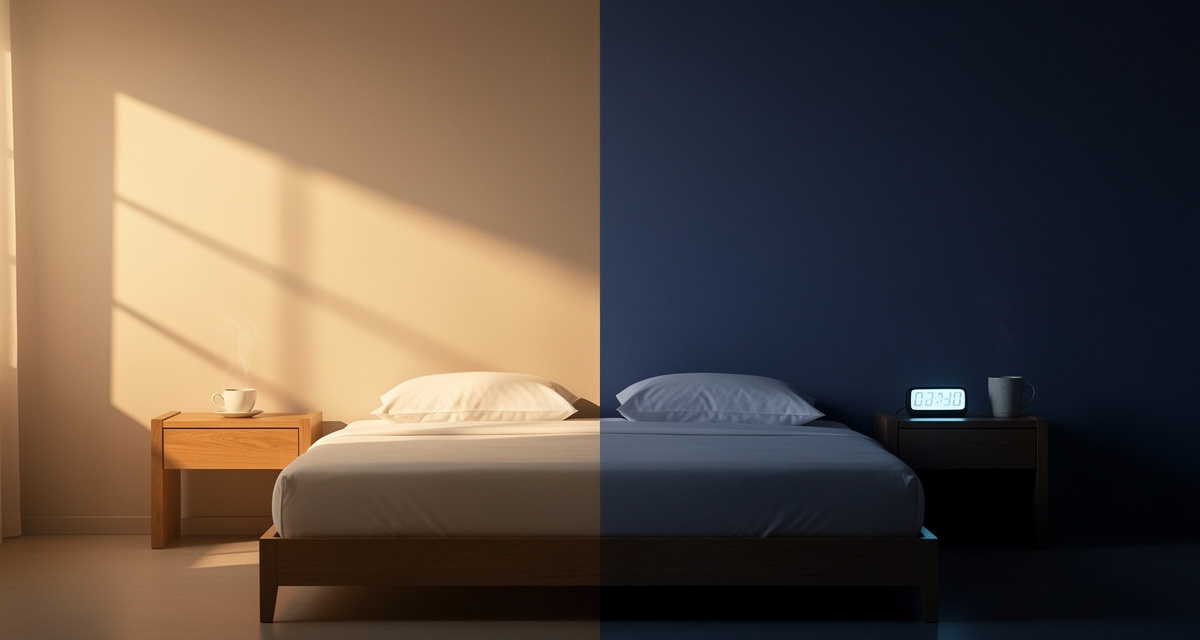
Your afternoon latte might be quietly hijacking your midnight. The same cup that rescues you from a 2 PM slump can delay melatonin, push your internal clock later, and chip away at deep sleep hours after you finish it. The good news? Small timing tweaks—aligned to your unique routine—can restore energy by day and protect sleep at night. This guide explains how caffeine affects your circadian rhythm, why some people are more sensitive than others, and how to build a coffee routine that works with (not against) your body clock.
Why Your Circadian Rhythm and Caffeine Timing Matter
Your circadian rhythm is your 24-hour internal clock that coordinates sleep and wake cycles, hormone release (including melatonin), and alertness. When your caffeine habits clash with this rhythm, three common problems show up:
- Falling asleep later than planned (a delayed sleep phase)
- Lighter, more fragmented sleep with less deep sleep
- A cycle of next-day sleepiness that drives even later, larger doses
Most adults tolerate up to about 400 mg of caffeine per day without major health concerns, but when you have it matters as much as how much. Research suggests caffeine late in the day can disrupt sleep even when taken 6 hours before bedtime. And for some people—especially evening chronotypes (“night owls”), pregnant individuals, and those sensitive to caffeine—the window needs to be even earlier and the dose smaller.
The Science: How Caffeine Moves Your Internal Clock
Caffeine doesn’t “give” you energy—it blocks the feeling of sleep pressure. Here’s how it interacts with your circadian system:
It blocks adenosine receptors. Adenosine builds up while you’re awake and signals sleepiness. By blocking adenosine’s A1 and A2A receptors in the brain, caffeine masks fatigue and promotes wakefulness. This can reduce perceived sleep pressure near bedtime, making it harder to fall asleep.
It can delay your melatonin rhythm. A controlled study found that a caffeine dose about equal to a double espresso taken 3 hours before habitual bedtime delayed melatonin onset by roughly 40 minutes—effectively pushing your internal clock later.
It lightens sleep architecture. Meta-analysis suggests caffeine reduces deep (slow-wave) sleep and increases lighter stages, which can leave you less restored even if total time in bed is unchanged.
The “6-hour rule” has data behind it. In a placebo-controlled trial using 400 mg of caffeine, doses taken at bedtime, 3 hours before bed, and even 6 hours before bed all shortened total sleep time and degraded sleep quality.
Half-life varies widely. In adults, caffeine’s half-life averages about 3–7 hours, but genetics, medications, smoking status, and pregnancy can extend or shorten it. Practically, a 2 PM coffee may still be active at 9–11 PM for many people.
Key takeaways:
- Caffeine can both mask sleepiness and shift your clock later.
- Sleep disruption is dose- and time-dependent, with large late-day doses having the biggest impact.
- Sensitivity is personal: genes (CYP1A2, ADORA2A), age, hormones, and habits all play a role.
Practical Playbook: Align Caffeine With Your Personal Rhythm
Below are evidence-informed strategies you can tailor to your schedule. They’re simple, specific, and designed to protect your circadian rhythm without cutting coffee completely.
1) Set a Personal Caffeine Curfew (Count Back 8–10 Hours)
Because caffeine’s half-life averages 3–7 hours, leaving 8–10 hours between your last dose and target bedtime minimizes residual stimulation. If you aim for a 10:00 PM bedtime, try a last dose by 12:00–2:00 PM. The well-known “6-hour” cutoff is a minimum; many sleepers benefit from a longer buffer.
2) Front-Load Your Intake Earlier in the Day
Caffeine boosts alertness best when sleep pressure is rising. A morning dose 30–60 minutes after waking often aligns with your natural circadian rise in cortisol and avoids melatonin interference at night. If you need two servings, keep the second one before early afternoon.
3) Right-Size the Dose (and Your Expectations)
Most adults can keep daily totals at or under 400 mg. Sensitive individuals, those with anxiety or insomnia, and evening chronotypes may feel better at 100–200 mg per day. During pregnancy, limit to less than 200 mg per day. Smaller, earlier doses protect sleep and reduce next-day “rescue” caffeine.
4) Know Your Sources and Stack Wisely
It’s easy to overshoot when caffeine hides in “energy” products, pre-workouts, sodas, chocolate, and some pain relievers. Skim labels and add up your total so the combined effect doesn’t spill into the evening. If you want help tallying, use the CaffCalc calculator to count your daily caffeine and see how your intake compares to typical ranges.
5) Pair Caffeine With Morning Light—Then Taper Both
Bright light in the morning anchors your circadian clock; late-evening bright light delays it. Combine your morning coffee with 10–15 minutes of outdoor light. As evening approaches, dim your lights and switch to decaf or herbal alternatives to avoid a double delay (caffeine plus bright light).
6) Match to Your Chronotype
Night owls are more vulnerable to late caffeine because their natural sleep time is already shifted later. Keep all caffeine early in the day, and use consistent wake times, morning light, and a firm afternoon cutoff to prevent drift. Early birds can still be affected by late doses—curfew rules apply to everyone.
7) Guard Deep Sleep Before Big Days
If you need peak performance tomorrow, protect slow-wave sleep tonight. Stop caffeine earlier than usual (10–12 hours pre-bed), dim screens, and keep a stable bedtime. You’ll wake with real energy, not just borrowed alertness.
8) Special Cases: Pregnancy, Medications, and Health Conditions
Pregnancy slows caffeine metabolism, so smaller, earlier doses matter even more. Some medications and health conditions also alter caffeine effects. When in doubt, ask your clinician and review safety basics on our health advice page.
Tip: Track your personal “sweet spot.” For one week, note the time and amount of caffeine, bedtime, time-to-sleep, nighttime awakenings, and morning alertness. Adjust your curfew and dose until sleep is smooth and consistent.
Frequently Asked Questions
Q: Does caffeine really shift my circadian clock, or just make me feel alert?
Both. Blocking adenosine makes you feel less sleepy, but controlled research suggests evening caffeine can also delay melatonin timing by about 40 minutes, nudging your internal clock later.
Q: I go to bed at 11 PM. What’s a simple cutoff time?
Start with a 1 PM cutoff (10 hours before bed). If sleep is still light or you toss and turn, move your last dose to noon or reduce your total amount. If sleep is solid, you can experiment with a 2 PM cutoff.
Q: Is decaf safe in the evening?
Usually. Decaf still contains a small amount of caffeine (often 2–15 mg per cup), which is unlikely to disrupt sleep for most people. If you’re sensitive, choose herbal options with zero caffeine.
Q: Why do my friends sleep fine after a 4 PM coffee while I can’t?
Genetics (like variants in CYP1A2 and ADORA2A), age, hormones, and habits drive big differences in sensitivity. Some people clear caffeine faster or are less prone to anxiety and light sleep after a given dose.
Q: What about naps and caffeine?
A short “caffeine nap” earlier in the day can boost alertness: drink a small coffee, then nap 15–20 minutes so you wake as caffeine kicks in. Avoid this strategy after early afternoon to protect nighttime sleep.
Bottom Line and Next Step
Caffeine can be part of a healthy day, but timing is everything. Keep your total near or below 400 mg (under 200 mg if pregnant), front-load your intake, and set a curfew 8–10 hours before bed to protect your circadian rhythm. Want an easy way to keep tabs on your total? Count your caffeine intake with CaffCalc and see how your day-to-day habits compare to typical ranges →
References & Further Reading
Scientific sources supporting this article:
- Effects of caffeine on the human circadian clock in vivo and in vitro (melatonin phase delay)
- Caffeine effects on sleep taken 0, 3, or 6 hours before bedtime (randomized, placebo-controlled)
- Systematic review and meta-analysis: The effect of caffeine on subsequent sleep
- Sleep Foundation: Caffeine and Sleep
- FDA: Spilling the Beans—How Much Caffeine Is Too Much?
- Mayo Clinic: Caffeine—How much is too much?
- MedlinePlus: Caffeine
- EFSA: Scientific Opinion on the safety of caffeine
- Adenosine, caffeine, and sleep–wake regulation: state of the science (review)
- AASM/Sleep Research Society consensus: recommended sleep duration for adults
- ACOG: Moderate caffeine consumption during pregnancy
Medical Disclaimer: This article is for informational purposes only and does not constitute medical advice. Consult with a healthcare provider before making significant changes to your caffeine intake, especially if you have underlying health conditions, take medications, or are pregnant or nursing.