Caffeine and Mitochondrial Biogenesis: What the Science Says
• By CaffCalc Team
Caffeine and Mitochondrial Biogenesis: What the Science Says
What if your morning coffee did more than wake you up—what if it helped your muscles build more power plants?
That’s the tantalizing question behind a growing body of research on caffeine and mitochondrial biogenesis. Mitochondria are the microscopic engines inside your cells that turn food into usable energy, and having more of them (or better-functioning ones) means better endurance, faster recovery, and healthier metabolism. Research suggests caffeine may nudge some of the same cellular switches that exercise flips—but the story has important nuances.
Here’s what the science actually says, and how to use caffeine smartly to support your training without sabotaging your sleep.
Why Mitochondrial Biogenesis Matters (and Why Coffee Drinkers Care)
Mitochondria turn what you eat into usable energy (ATP) and play roles in endurance, metabolic health, heat production, and recovery. More—and better-functioning—mitochondria generally mean you can produce energy more efficiently, spare glycogen, and delay fatigue during long or intense efforts.
So where does caffeine fit? Research suggests caffeine may influence some of the same cellular switches that exercise flips, potentially priming your muscles for training adaptations. But there’s nuance:
- Lab studies in cells and animals often use higher caffeine exposures than you’d get from coffee.
- In humans, caffeine reliably boosts performance; evidence that it directly increases mitochondrial content is more limited, with the best signal coming from how it may amplify exercise-driven pathways.
- Sleep and safety still matter. Poor timing or excess intake can undermine training and recovery.
Bottom line: caffeine may support the cellular conditions for mitochondrial biogenesis—especially when paired with smart training and sleep hygiene—but it is not a substitute for exercise.
The Science: How Caffeine Could Influence Mitochondrial Biogenesis
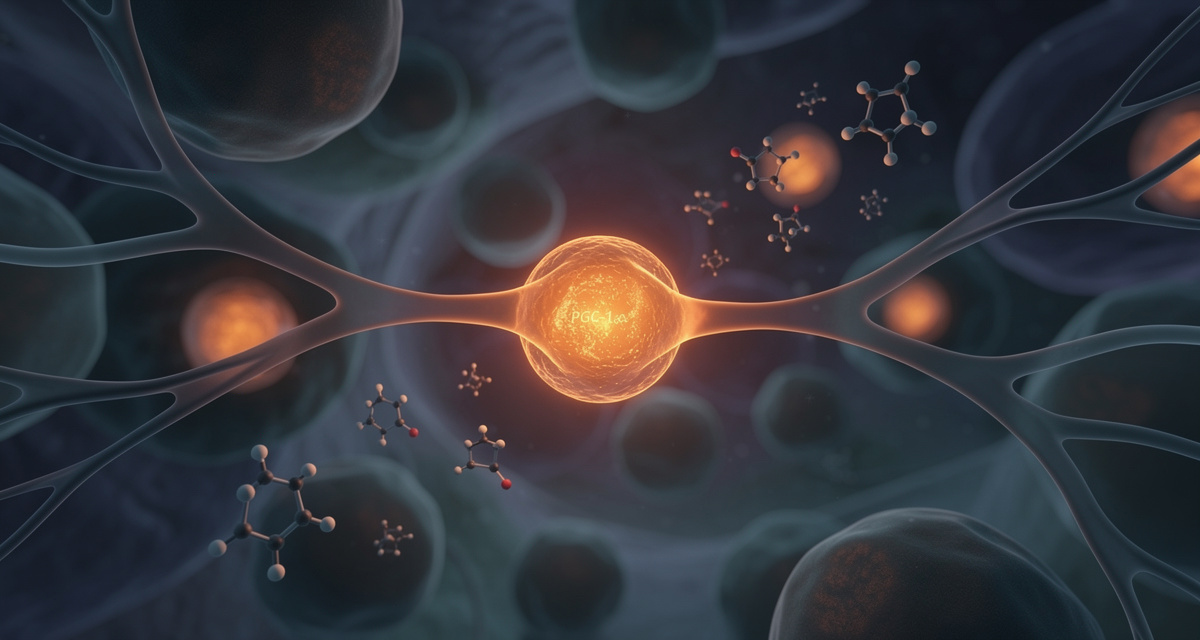
Mitochondrial biogenesis is largely coordinated by a coactivator called PGC-1α, which switches on networks of genes involved in making and maintaining mitochondria. Several upstream signals can increase PGC-1α activity in muscle during and after exercise:
- AMPK and p38 MAPK respond to energetic stress.
- Calcium-dependent pathways (like CaMK) respond to repeated muscle contractions.
- cAMP/PKA and CREB-related transcription factors can also feed into PGC-1α regulation.
Where caffeine may interact with these pathways
Adenosine receptor antagonism: At typical dietary doses, the most robust effect of caffeine is blocking adenosine receptors, which reduces perceived effort and can allow higher training quality—an indirect path to stronger exercise signals that drive PGC-1α.
Calcium-related signaling (context matters): In isolated muscle and cell studies, very high caffeine concentrations can trigger calcium release from the sarcoplasmic reticulum via ryanodine receptors, activating calcium-sensitive pathways tied to PGC-1α. However, those concentrations are far above what’s reached in human plasma after a normal cup of coffee.
AMPK/PPARδ/PGC-1α cross-talk: In muscle cell models, physiologically relevant caffeine exposures have been associated with increases in PGC-1α and markers of mitochondrial turnover. In humans, the cleanest story is that caffeine enhances performance and training capacity, while exercise itself remains the primary driver of mitochondrial biogenesis.
Key takeaways in plain language
- Caffeine can help you train harder or feel workouts as easier, which strengthens the exercise signals that build mitochondria.
- Direct caffeine-to-mitochondria effects seen in petri dishes don’t always translate 1:1 to your morning mug.
- The more consistent the training stimulus (endurance intervals, tempo work, long runs or rides), the more likely you’ll see mitochondrial benefits—caffeine is a supportive tool, not the engine.
Practical Ways to Use Caffeine to Support Mitochondrial Goals
Here are evidence-informed strategies that respect both performance and recovery.
1) Pair Caffeine With Key Endurance Sessions
Why it works: Caffeine consistently improves endurance performance and reduces perceived exertion. Higher-quality sessions mean stronger cellular signals for PGC-1α and mitochondrial biogenesis.
How to apply: Consider caffeine before demanding aerobic sessions like intervals, tempo, or long efforts. Start low to assess tolerance.
2) Start With Conservative Dosing
Why it works: Many athletes respond to modest amounts. Reviews suggest even 1–2 mg/kg can aid certain performance tasks, while 3–6 mg/kg is commonly used in sports settings.
How to apply: Begin near 1–3 mg/kg about 30–60 minutes before training. For a 70 kg (154 lb) person, that’s roughly 70–210 mg. Do not exceed 400 mg/day from all sources if you’re a healthy non-pregnant adult.
3) Protect Your Sleep Window
Why it works: Mitochondrial adaptations depend on recovery. Research suggests a 400 mg dose taken as early as six hours before bedtime can measurably disrupt sleep. Many people benefit from an even longer cutoff.
How to apply: Set a caffeine curfew at least 6–8 hours before planned bedtime (for example, last dose by 2 p.m. if lights out is ~10 p.m.). If you’re sensitive, extend to 8–10 hours.
4) Use Caffeine Strategically, Not Constantly
Why it works: Daily, frequent high dosing can raise side effects and may dampen responsiveness for some people. Cycling usage around your most important training days keeps benefits while reducing sleep risk.
How to apply: Anchor caffeine to 2–4 key workouts per week. On easy days, go decaf or very low-dose.
5) Mind Total Daily Intake Across All Sources
Why it works: Caffeine hides in coffee, tea, energy drinks, pre-workouts, sodas, pills, and some foods. Overshooting can cause jitters, anxiety, palpitations, GI upset, or sleep loss—all counterproductive for training and recovery.
How to apply: Tally your day’s caffeine before adding a pre-workout dose to make sure you’re still within safe limits. Count your daily caffeine intake with CaffCalc and see how it compares to typical ranges.
6) Consider Your Individual Sensitivity and Context
Why it works: Genetics, body mass, smoking status, medications, and habitual intake all affect caffeine metabolism and response. What helps a teammate might make you edgy or sleepless.
How to apply: Keep notes on dose, timing, workout feel, and overnight sleep. Adjust gradually. For general safety benchmarks, see our health advice page.
7) Don’t Swap Coffee for Training
Why it works: Exercise is the primary trigger for mitochondrial biogenesis in humans. Caffeine can support the training signal; it does not replace it.
How to apply: Prioritize a progressive endurance plan. Think of caffeine as a supportive tool—like good shoes or a well-structured interval set—not the engine.
8) If Thermogenesis Is a Goal, Temper Expectations
Why it works: Some human studies suggest caffeine can raise energy expenditure and may interact with brown adipose tissue (BAT), but effects vary and are modest in free-living conditions.
How to apply: Focus on consistent activity, protein-forward nutrition, and sleep. Treat any caffeine-driven thermogenic effect as a small bonus, not a strategy.
Frequently Asked Questions
Q: Can caffeine alone increase my mitochondria without exercise?
Probably not in a meaningful way in humans. Strong evidence points to exercise as the primary driver. Caffeine can support the same signaling pathways and help you train better, which is likely the main route to more mitochondria.
Q: Are cell studies showing caffeine triggers calcium release relevant to my coffee?
Those effects typically require millimolar caffeine concentrations—much higher than blood levels reached after normal consumption. They help scientists study mechanisms but don’t directly map to everyday dosing from coffee or tea.
Q: Is coffee as good as a caffeine pill for training?
Both can be effective. Pills are easier to dose precisely; coffee varies by bean, brew, and cup size. If you need accuracy for competition, standardized caffeine sources help. For everyday training, either can work—just count your total intake.
Q: Does caffeine tolerance blunt these training benefits?
Habitual users may see somewhat smaller acute performance effects than caffeine-naive users, but research suggests meaningful ergogenic benefits often persist. Occasional lower-dose or caffeine-free days may help preserve sensitivity.
Q: Should I take caffeine after a workout to boost adaptation?
Evidence for post-workout caffeine specifically enhancing mitochondrial adaptations is limited in humans. Pre-workout timing has the strongest support because it improves training quality, which is the real driver of adaptation.
The Bottom Line
Caffeine doesn’t build mitochondria by itself, but it can amplify the training that does—mainly by helping you go longer, harder, or with less perceived effort while engaging molecular pathways linked to PGC-1α. Use modest doses, time them well, and guard your sleep.
When you want to sanity-check your daily total across coffees, teas, and pre-workouts, count your caffeine intake with CaffCalc and see how you compare to typical ranges →
References & Further Reading
Scientific sources supporting this article:
- Effect of caffeine on mitochondrial biogenesis in skeletal muscle – A narrative review (Clinical Nutrition ESPEN, 2022)
- Molecular Basis of Exercise-Induced Skeletal Muscle Mitochondrial Biogenesis (Cold Spring Harbor Perspectives in Medicine, 2018)
- Metabolic effects of physiological levels of caffeine in myotubes (2018)
- Ergogenic effects of caffeine are mediated by myokines (2022)
- Caffeine as a tool to investigate sarcoplasmic reticulum and intracellular calcium dynamics in human skeletal muscles (2020)
- International Society of Sports Nutrition position stand: caffeine and exercise performance (2021)
- The Effect of Acute Caffeine Ingestion on Endurance Performance: Systematic Review and Meta-analysis (2018)
- Caffeine effects on sleep taken 0, 3, or 6 hours before going to bed (J Clin Sleep Med, 2013)
- Sleep Foundation: Caffeine and Sleep
- FDA Consumer Update: Spilling the Beans—How Much Caffeine Is Too Much?
- EFSA Scientific Opinion on the safety of caffeine (2015)
- Physically active men with high brown adipose tissue activity showed increased energy expenditure after caffeine supplementation (2021)
Medical Disclaimer: This article is for informational purposes only and does not constitute medical advice. Consult with a healthcare provider before making significant changes to your caffeine intake, especially if you have underlying health conditions, take medications, or are pregnant or nursing.