Caffeine and Sleep: The Science of When to Avoid It
• By Ivan Ushakovsky
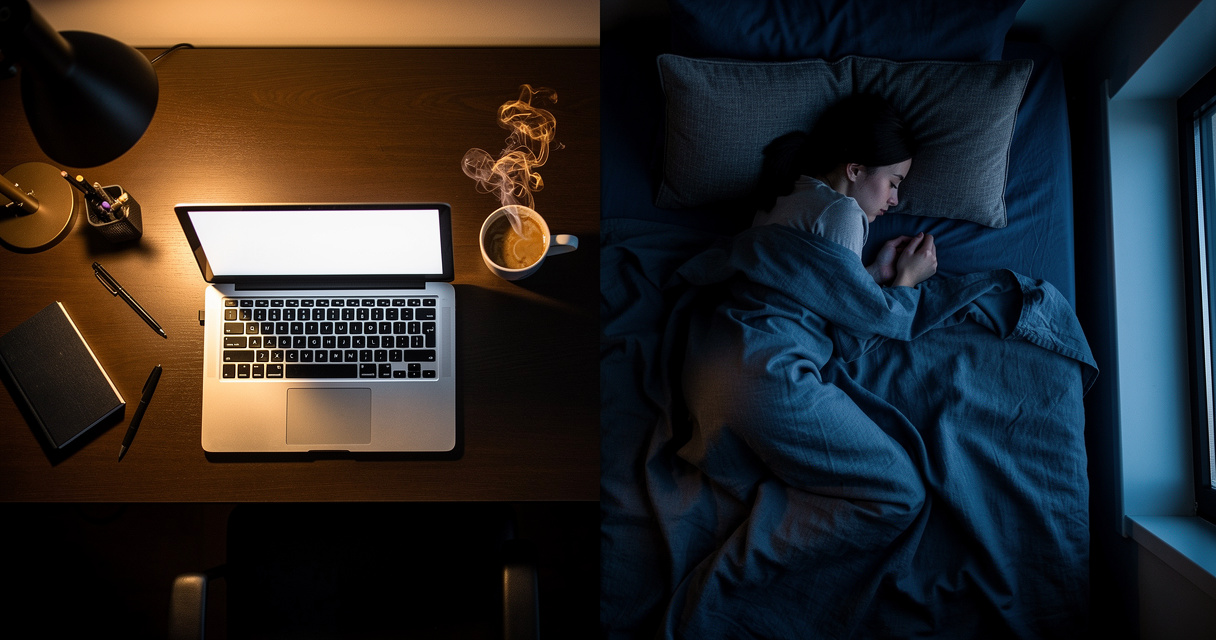
Why timing is as important as dose
Caffeine keeps you awake by blocking adenosine receptors, especially the A2A subtype, which normally accumulate sleep pressure as the day goes on. The same dose at 8 AM has a very different effect on sleep than the same dose at 4 PM, not because the caffeine is different, but because there is less time to clear it before bed.
The key question is not just “how much?” but “how much is left when I try to sleep?” A 2013 controlled study in the Journal of Clinical Sleep Medicine (Drake et al.) found that 400 mg of caffeine taken 6 hours before bed still reduced total sleep time by more than one hour and significantly disrupted sleep efficiency. The same dose taken 3 or even 0 hours before bed was worse, but the 6-hour window was still meaningfully disruptive.
What the half-life range means in practice
Caffeine’s half-life in healthy adults averages about five hours, but individual values spread from roughly two to nine hours. After one half-life, half the dose remains; after two half-lives, one quarter; after three, about one eighth. The practical consequence is that a late afternoon dose can still be active at bedtime for many people.
Several factors widen the range:
- Pregnancy can extend half-life toward 10 hours in the third trimester.
- Oral contraceptives can extend half-life toward 9–11 hours.
- Smoking shortens half-life by inducing CYP1A2.
- CYP1A2 genetics produce fast, normal and slow metabolizers.
These modifiers mean a cutoff that works for one person may be too late for another.
Evidence-based cutoffs by dose
A 2023 systematic review and meta-analysis in Sleep Medicine Reviews quantified the dose-timing relationship across many studies. For a typical cup of coffee containing about 107 mg, an 8–10 hour buffer before bed was needed to avoid a measurable reduction in total sleep time. For a dose around 217 mg, the buffer stretched to about 13 hours.
A 2025 randomized crossover trial in Sleep added nuance: 400 mg within 12 hours of bedtime altered sleep architecture and increased fragmentation, while 100 mg up to 4 hours before bed produced no significant objective change in that small sample. The takeaway is not that small late doses are harmless for everyone, but that the dose-response curve is steep and individual.
Start with these buffers and adjust earlier if your sleep is fragile:
- ~100 mg serving: stop 8–10 hours before bed.
- ~200–300 mg serving: stop 12–14 hours before bed.
- ≥400 mg or sensitive/pregnant: stop as early as possible, often before noon.
How caffeine changes sleep quality
Caffeine can reduce slow-wave (deep) sleep, increase the time it takes to fall asleep, and fragment the night with more awakenings. A 2021 study in the Journal of Biological Rhythms also found that regular daytime caffeine can delay REM sleep promotion and worsen perceived sleep quality, even when the last dose was not especially late.
Deep sleep is the stage most commonly affected by late caffeine. You may spend the same number of hours in bed but wake up less restored. The 2023 meta-analysis confirmed that this effect is strongest at higher doses and shorter times before bed.
How to set your personal curfew
- Estimate your dose, not just your drink. A 16 oz drip coffee often contains 150–250 mg, not 100 mg. Use CaffCalc to total your sources.
- Work backwards from your bedtime. For a 10:30 PM bedtime, a 100 mg coffee should finish by 12:30–2:30 PM.
- Move it earlier if sleep is off. If you take 30 minutes or more to fall asleep, wake frequently, or feel unrested, shift your last dose earlier by one hour each week until sleep improves.
- Front-load your caffeine. Strongest dose in the morning; any afternoon dose should be smaller and earlier.
- Use the half-life calculator. CaffCalc’s half-life tool can estimate how much caffeine remains in your system at your planned bedtime for different drinks and dose modifiers.
Special cases
Pregnancy: ACOG recommends keeping total caffeine at or below 200 mg per day and taking it earlier. In the third trimester, the longer half-life means even morning caffeine may linger.
Oral contraceptives: Estrogen-containing pills can roughly double caffeine’s half-life, so an earlier cutoff and lower single dose often help.
Insomnia or anxiety: Consider a hard noon cutoff for two weeks to test whether sleep improves, then gradually move the time later only if you remain stable.
Frequently Asked Questions
Q: I go to bed at 11 PM. When should I stop caffeine?
For a small coffee (~100 mg), aim for 1–3 PM. For a large coffee or energy drink (~200–300 mg), stop by 9–11 AM. Sensitive individuals should move both earlier.
Q: Does green tea affect sleep less than coffee?
The source matters less than the dose. A small green tea (~30–50 mg) is lower risk than a large drip coffee (~150–250 mg), but the same time buffer applies to the milligrams you consume.
Q: Can I build a tolerance so late caffeine doesn’t matter?
Tolerance reduces some subjective alerting effects but does not fully protect sleep architecture. Regular users still show reduced deep sleep and delayed REM from late caffeine.
Q: What about a caffeine nap?
Drink ~100 mg of caffeine, then nap for 15–20 minutes before the caffeine peaks. This can be useful, but only before mid-afternoon to protect nighttime sleep.
Q: Does decaf count?
Decaf coffee and tea still contain small amounts of caffeine, typically 2–15 mg per serving. For most people this is negligible, but if you are very sensitive, count it toward your total.
References & Further Reading
Scientific sources supporting this article:
- PubMed: Caffeine effects on sleep taken 0, 3, or 6 hours before going to bed (J Clin Sleep Med, 2013)
- PubMed: The effect of caffeine on subsequent sleep: systematic review and meta-analysis (Sleep Med Rev, 2023)
- PubMed: Dose and timing effects of caffeine on subsequent sleep: randomized crossover trial (Sleep, 2025)
- PubMed: Regular Caffeine Intake Delays REM Sleep Promotion (J Biol Rhythms, 2021)
- PubMed: Population pharmacokinetics—smoking shortens caffeine half-life (2009)
- PubMed: Oral contraceptives impair caffeine elimination (1980)
- PubMed: Pregnancy extends caffeine half-life (1982)
- EFSA Scientific Opinion on the safety of caffeine (2015)
- FDA: Spilling the Beans—How Much Caffeine is Too Much?
- ACOG: How much coffee can I drink while I’m pregnant? (≤200 mg/day)
- Sleep Foundation: Caffeine and Sleep
Medical Disclaimer: This article is for informational purposes only and does not constitute medical advice. Consult with a healthcare provider before making significant changes to your caffeine intake, especially if you have underlying health conditions, take medications, or are pregnant or nursing.